The challenge
An aluminium producer’s inspection system captured images of every surface defect, but around a third of the records had the wrong category or none at all. Quality engineers had to review images and spatial patterns manually before they could decide on a coil.
Our approach
- Used the existing inspection images, with no new hardware, as the training base.
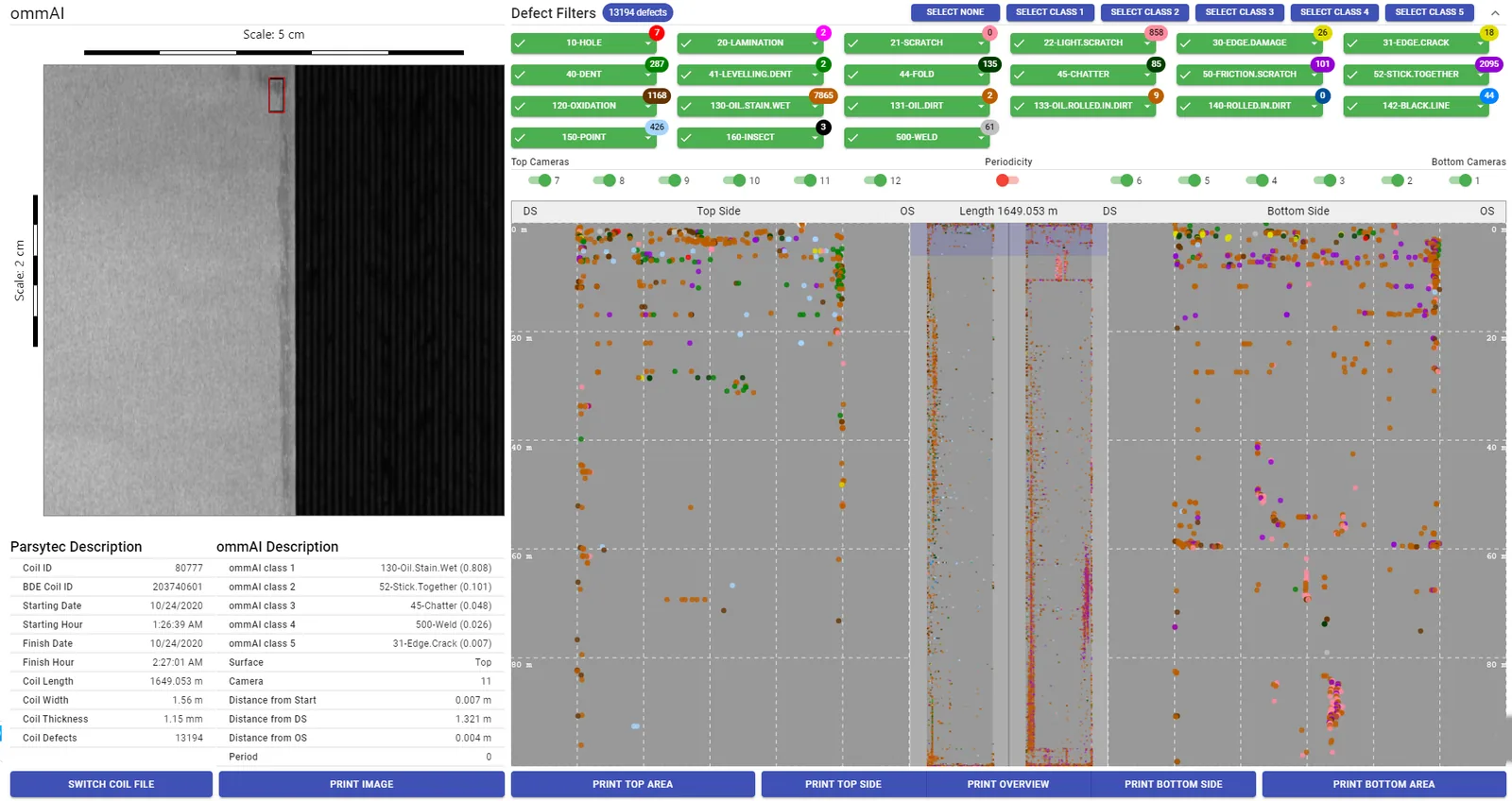
- Trained deep-learning models to reclassify defect images, showing the five most likely classes with their scores.
- Built the SOPHIA software with a React front end: defect images, coil metadata, category and camera filters, and print views for reporting.
- Mapped every defect on the top and bottom surfaces in 100-metre sections, with an overview of the full coil.
Results & features
- From ambiguous inspection records to structured, reviewable quality information.
- Visible uncertainty: alternatives and scores help experts settle cases where classes look similar.
- Spatial patterns, such as periodic or edge defects, become obvious at a glance.
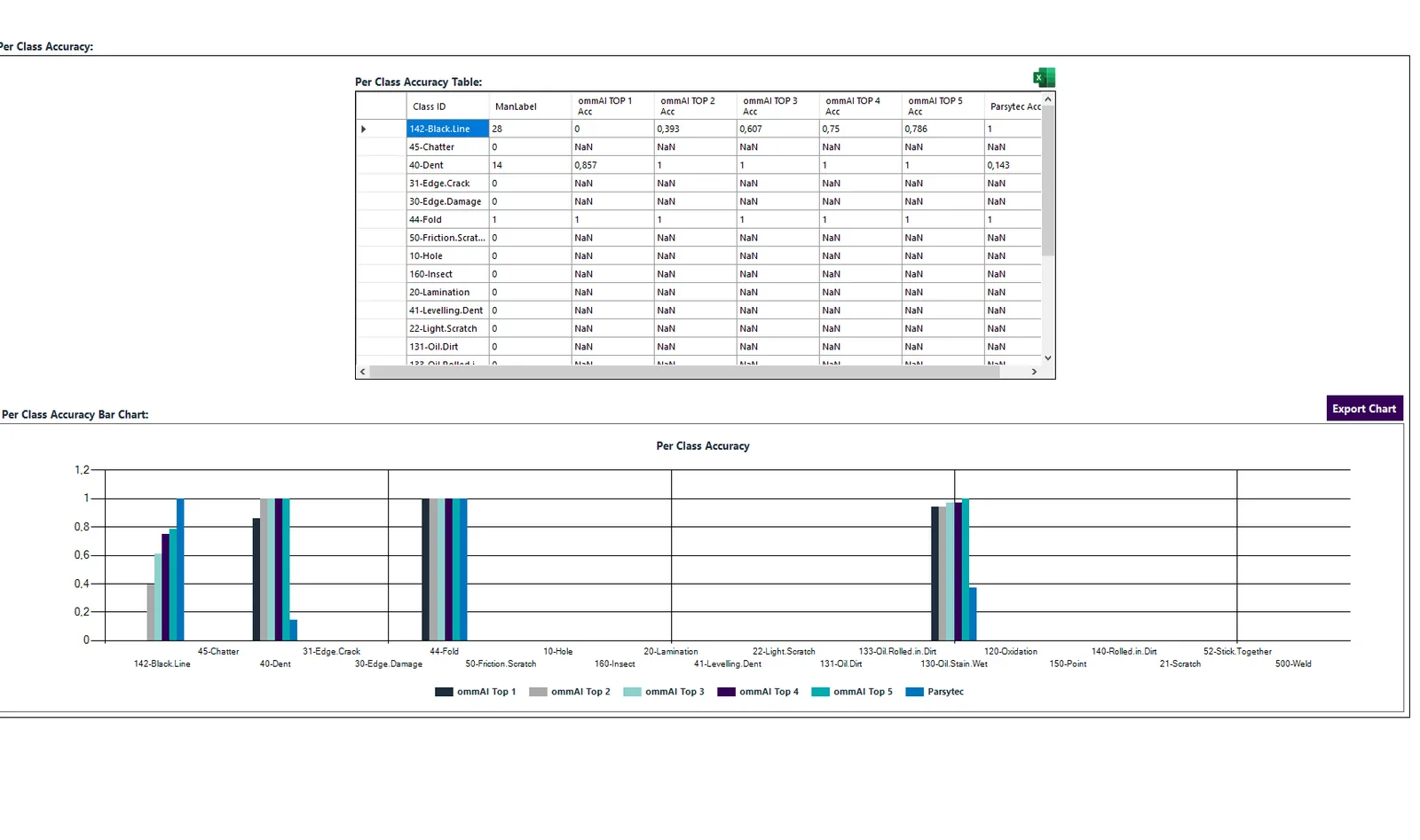
- Analytics screens compare model accuracy per class against manual labels.